

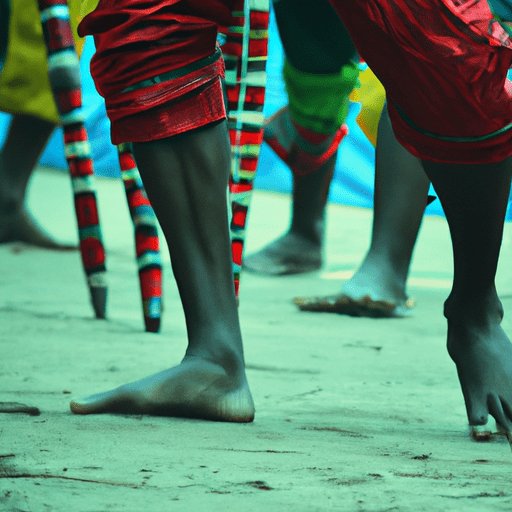
Assam is a state in the North Eastern part of India, with a rich cultural heritage and its own distinct style of folk dance. From the traditional Bihu dance to the modern Jhumur dance, Assam has a variety of folk dances that represent the culture and values of its people. In this article, we will explore the folk dance of Assam, its various forms, and the stories behind them.
What is Assam’s Folk Dance?
Assam’s folk dance is an integral part of the culture and traditions of the state. It is an expression of joy, happiness, and celebration, and is often performed at festivals, weddings, and other special occasions. The folk dance of Assam consists of dances from various ethnic communities, such as the Bodo, Karbi, Deuri, Mising, and Moran. Each dance has its own unique style and steps, and the costumes and instruments used also vary from one dance to another.
The most popular folk dance of Assam is the Bihu dance, which is performed during the Bihu festival. This dance is performed in a circle and has fast and energetic steps. The dancers are dressed in colorful traditional costumes and accompanied by traditional instruments such as the dhol, pepa, and taal. The Bihu dance is usually accompanied by the singing of traditional Bihu songs.
Other popular folk dances of Assam include the Jhumur dance, which is performed during the harvest season, and the Sattriya dance, which is a classical dance form. The Sattriya dance is a religious dance form and is performed by the Vaishnavite sect of Assam. It is usually accompanied by traditional instruments such as the cymbals and drums.
Uncovering the Traditions of Assam’s Folk Dance
Assam’s folk dance is rooted in the traditions and culture of the state, and it is a way for the people of Assam to express their joy and happiness. The various dances of Assam have their own unique stories and meanings, which are often tied to the traditional beliefs and customs of the communities.
For example, the Bihu dance is said to be a celebration of the Assamese New Year, and it is believed to bring good luck and prosperity. The Jhumur dance is said to be a way of expressing joy and happiness during the harvest season, and the Sattriya dance is a way of paying homage to the gods and goddesses.
The folk dance of Assam is an important part of the culture
Folk dances of Assam play an integral part in the culture of the Indian state. The richness of the dances lies in the unique movements and instrumentation used, as well as their vibrant costumes, intricate patterns, and vibrant music.
The Bihu, arguably the most famous folk dance of Assam, is a stirring celebration of the state’s harvest season. The dance is performed by men and women alike, wearing traditional clothing such as mekhela (long skirt) and blouse, traditionally performed to the accompaniment of dhol and pepa, a type of Borgeet (classical Assamese songs). Bihu is a very lively dance, with dancers swaying, raising their hands and swirling in a ring around a bonfire.
The Bagurumba, meaning “dance of the wild bison” in the local Bodo language, is so named due to its stiff and rigid movements. The dance is accompanied by traditional tuck drums and cymbals, while dancers sway their heads and upper bodies with fierce energy. The Kaziranga dance is typically performed to the song ‘Ram Ridire’, invoking Lord Rama and his wife Sita and the fishermen’s dance of the Mishing tribe, which is performed on a floating dais, are further examples of folk dance of Assam.
Finally, the amazing Lathi dance (also known as the ‘reed dance’) is an exuberant group dance in which couples dance with a lathi (long bamboo stick) as their only prop. All these folk dances, along with several other forms found in the region, keep alive the rich cultural history of Assam, offering a glimpse into its vibrant and colorful past.