

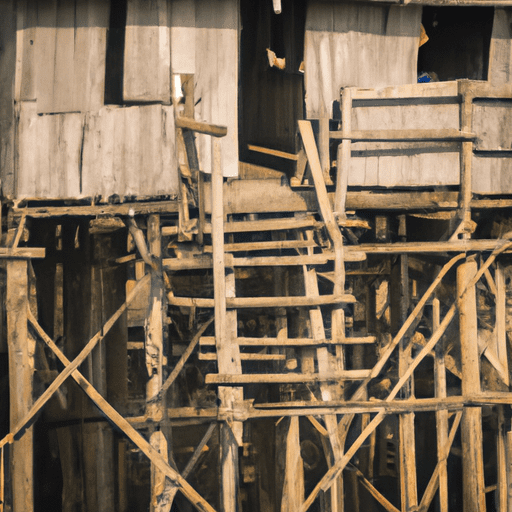
Houses in Assam are built on stilts. This is a unique architectural style that has been used in the region for centuries and is still practiced today. It is a testament to the ingenuity of the people of Assam, who have found a way to make the most of their environment and create a structure that is both practical and aesthetically pleasing. In this article, we will explore the history and advantages of building houses on stilts in Assam.
Traditional Architecture
Building houses on stilts is a traditional architectural style in Assam. This style has been in use for centuries and is still practiced today. The stilt houses are typically made from bamboo, wood, and other local materials, and are raised a few feet off the ground. This allows for plenty of airflow and ventilation, as well as providing protection from floods and other natural disasters. The houses are usually brightly painted and decorated with intricate designs, giving them a unique and interesting appearance.
Advantages of Building on Stilts
There are many advantages to building houses on stilts in Assam. One of the main advantages is that it helps to protect the inhabitants from flooding. During the monsoon season, the rivers in Assam can swell to dangerous levels, and the stilt houses provide a safe refuge from the rising waters. Additionally, the stilt houses provide excellent ventilation, as they are raised above the ground. This helps to keep the interior of the house cool in the hot and humid climate of Assam. Finally, the stilt houses are aesthetically pleasing, with their bright colors and intricate designs.
Building houses on stilts is a traditional architectural style in Assam that has been used for centuries. It has many advantages, including protection from flooding, excellent ventilation, and an aesthetically pleasing design. This style of architecture is a testament to the ingenuity of the people of Assam, who have found a way to make the most of their environment and create a structure that is both practical and beautiful.
Houses in the North-eastern Indian state of Assam are built on stilts due to floods that inundate the area. Assam is one of the most flood-prone areas of India, and its geography and topography contribute to its vulnerability.
During the rainy season, heavy precipitation and snowmelt from the Himalayas cause rivers to swell and overflow their banks. Subsequently, much of the state is submerged for a few months each year as a result of this intense flooding. Furthermore, deforestation of the region exacerbates the problem by reducing the land’s capacity to absorb high levels of rainfall.
In response, Assamese people have developed a unique method of architecture to cope with flooded conditions—they build their homes on stilts. This stilt architecture, also known as pile architecture, was developed to elevate the house above the height of the floods. Houses are usually built on four stilts, which effectively keep the structure well above the floodwaters. Additionally, an extra set of stilts may be constructed nearby and serve as an elevated platform for storing furniture and other items that can quickly be rescued from the floods.
Stilt houses in Assam are made from bamboo and timber, and do not require nails, screws, or glue for assembly. This makes these structures more flexible, and allows them to move with the flow of the water, thereby reducing damage to the stilt foundation and house structure.
In addition to providing protection against floods, stilt houses have cultural and religious significance in Assam. According to traditional beliefs, building raised homes is part of honouring the gods of the river, who flood the area to grant its inhabitants abundant crops and a healthy livelihood.
Therefore, Assamese families build their homes on stilts not only to protect their property, but also to ensure their leisurely and spiritual connection with the land. Though stilt houses have served the Assamese people well, the increasing frequency and intensity of floods calls for the implementation of improved preventive and compensatory measures, such as higher embankments, improved drainage systems, and more resilient flood-proof housing designs.