

The Uncharted Terrain of a Child’s Mind
Have you ever gazed into the innocent eyes of a newborn and wondered what goes on in their mind? Those tiny gears shifting, the neurons firing, the countless connections being made – it’s nothing short of miraculous. Early cognitive development is a fascinating journey that transforms a baby’s raw potential into skills and capabilities, setting the stage for lifelong learning.
Laying the Groundwork: Initial Explorations
When parents enroll their children in nurturing environments like early learning Chatswood, they are ensuring an exposure to stimuli and experiences that promote cognitive growth. But this development begins long before preschool – right from those first cries, gurgles, and giggles. Let’s decode the layers of this captivating process.
Sensory Milestones: Experiencing the World
- Touch and Feel: From the gentle touch of a mother to the texture of a toy, babies start discerning different tactile sensations early on.
- Sight and Observation: Initially blurred, a baby’s vision sharpens over months, letting them recognize faces, track moving objects, and differentiate between colors.
- Sound and Recognition: The lullabies, the soft-spoken words, or even the ambient sounds help infants differentiate tones and eventually recognize familiar voices.
Motor Development: The Dance of Coordination
- Gross Motor Skills: These are the ‘larger’ actions. From the first time they lift their head to the moment they take their first step, it’s all about muscle strength and coordination.
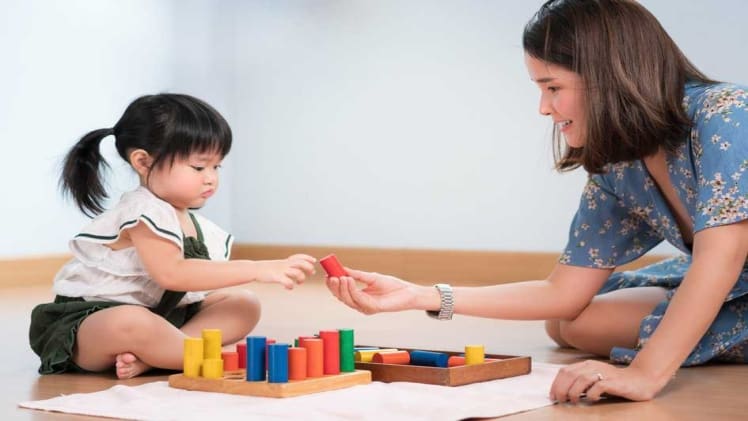
- Fine Motor Skills: Delicate tasks, like grasping a spoon or picking up a small toy, signify the refinement of smaller muscle movements.
Problem Solving: The Seeds of Logic
- Cause and Effect: By 6 months, babies start understanding the concept of cause and effect. Drop a toy, it falls. Press a button, a sound plays.
- Memory Enhancement: Around their first birthday, children can recall specific objects or people, showcasing the strengthening of their memory muscles.
Language and Communication: Beyond Babbling
- Pre-linguistic Stage: Even before uttering words, babies communicate. Those coos, babbles, and gestures are all precursors to language.
- Vocabulary Explosion: Typically between 18 to 24 months, toddlers undergo a rapid phase where their vocabulary expands at an astounding rate.
Social Cognition: Navigating Relationships
- Emotion Recognition: By observing faces, infants as young as 6 months can sometimes differentiate between basic emotions like happiness and sadness.
- Interactive Play: As they approach their second year, toddlers move from parallel play to more interactive, cooperative scenarios with peers.
Cultivating Curiosity: The Role of Environment
- Stimulating Spaces: An environment rich in colors, textures, sounds, and challenges can significantly enhance cognitive development.
- Guidance & Support: A supportive figure, be it a parent, guardian, or educator, can provide the right balance of encouragement and challenge, ensuring optimal mental growth.
Challenges & Variabilities: Every Child is Unique
It’s vital to remember that cognitive development is not a race. While milestones provide a general guideline, every child is unique. Some may speak earlier; others might choose to communicate more through gestures. This variability is entirely normal.
Celebrating the Wonders of Early Cognition
The miracle of the mind is evident in every laugh, every gaze, and every tiny discovery our children make. Early cognitive development is a testament to the boundless potential each child carries within. By understanding its intricacies and ensuring the right support, like that provided by institutions such as early learning Chatswood, we can pave the way for a future filled with curiosity, intelligence, and continuous growth. Here’s to celebrating the wonders of cognition and the endless possibilities it promises!