

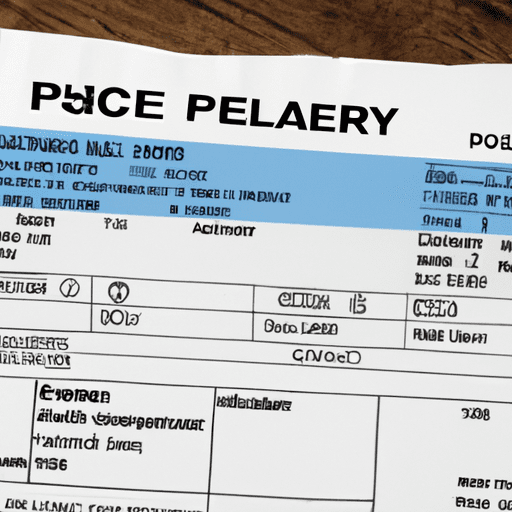
Keeping track of your electricity bills can be a hassle. Fortunately, with the help of technology, checking your Pesco bill online is now easier than ever. This article will discuss the benefits of checking your Pesco bill online, as well as how to do it.
Checking Your Electricity Bill Online
Checking your Pesco bill online is a straightforward process. All you need to do is log into your Pesco account and select the ‘View Bill’ option. Once you do this, you will be able to view your current bill and any past bills. You can also take advantage of the ‘Pay Bill’ option to pay your bill online.
The Benefits of Checking Your Pesco Bill Online
-
Convenience: Checking your Pesco bill online is much more convenient than visiting a Pesco office or waiting for your bill to arrive in the mail. You can quickly and easily check your bill at any time, from any place.
-
Accuracy: When you check your Pesco bill online, you can be sure that it is accurate. All of your information is stored in a secure database, so you can be sure that your bill is up to date and correct.
-
Time-Saving: Checking your Pesco bill online can save you a lot of time. You don’t have to wait for the bill to arrive in the mail or take time out of your day to visit a Pesco office.
-
Cost-Saving: Checking your Pesco bill online can also help you save money. You don’t have to pay for postage or travel to a Pesco office to check your bill.
In conclusion, checking your Pesco bill online is a great way to save time and money. It is fast, convenient, and accurate, and can help you stay on top of your electricity bills.
The development of digital infrastructure in Pakistan has opened new channels for citizens to access public services. The current pandemic has escalated the need for digital accessibility to avoid public inconveniences and promote social distancing. In this context, the Punjab provincial government recently announced that citizens can now check and pay their electricity bills online.
The Punjab government has digitalized the process of electricity bill checking and payment across the province. This system, known as the Online Electricity Bill Checking (PeSCO) system, is aimed to improve electricity bill management and payment services to citizens. According to a spokesperson from the government, this revolutionary project by the provincial government of Punjab is expected to reduce energy violations and minimize energy losses. With the digitization of energy bill payment process, the state will also take steps toward promoting sound financial discipline throughout the province.
This online system was launched with the intent to provide greater convenience to citizens for the online payment of electricity bills. The newly introduced system allows users to complete the process in just a few simple steps. Once a user visits the dedicated website, they can easily access the payment portal to check their current electricity bill along with the payment plan.
By using the online payment system, citizens can make payments through credit cards, debit cards, as well as bank transfers. The government has been quite transparent and user-friendly while setting up the system, as all of the activities are done via Visible Encapsulated Protocol (VEP). Furthermore, in case of any discrepancies, citizens have the right to file for a refund as well.
The Online Electricity Bill Checking (PeSCO) system was implemented by the Punjab government in collaboration with the United Bank Limited (UBL). The government has also stated that on successful implementation of the system, more public services such as water bills, gas bills, and more will be included in the digital ecosystem.
This new system of checking and paying electricity bills is expected to play a pivotal role in making public services more accessible and accountable in the country. Citizens of Punjab now have the advantage of checking and paying their electricity bills right from their homes, without the need to go to designated offices or centers. This effort by the Punjab government is a remarkable step towards building a digital infrastructure and bring public services to the doorsteps of the people.