

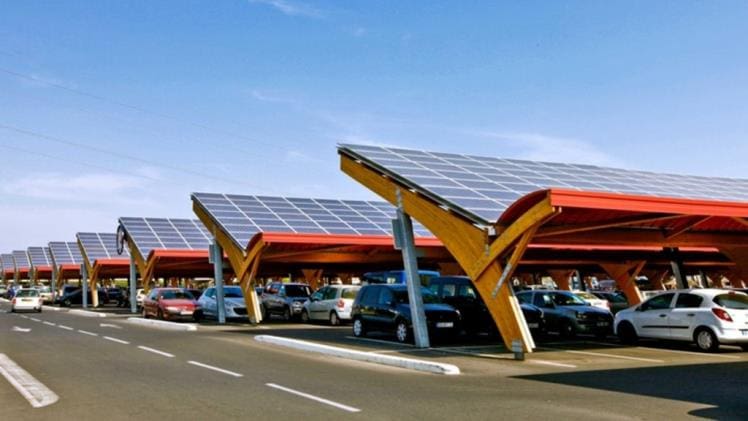
In the quest for a greener and more sustainable future, the urban landscape is undergoing a transformation driven by innovative technologies and forward-thinking initiatives. One such groundbreaking concept gaining traction is the integration of solar car park structures within urban environments. These structures provide parking spaces and are vital in generating clean and renewable energy, contributing significantly to sustainable urban development.
As urban areas grow and expand, the demand for parking spaces has become a pressing issue. However, traditional parking facilities are often criticized for their land consumption, heat island effects, and lack of environmental consideration. This is where the concept of solar car park structures comes into play. These structures are designed to maximize space utilization by combining parking infrastructure with solar panels, effectively turning idle space into productive energy-generating assets.
One of the key advantages of solar car park structures is their ability to harness solar energy and convert it into electricity. The solar panels integrated into the structures capture sunlight and convert it into usable power, which can be utilized to meet the facility’s energy needs or even contribute surplus energy back to the grid. This clean energy generation reduces the reliance on fossil fuels, thereby cutting greenhouse gas emissions and mitigating the impact of climate change.
Moreover, solar car park structures offer dual benefits by providing shaded parking spaces. The canopies formed by the solar panels offer protection from the sun’s rays and adverse weather conditions, enhancing users’ comfort and prolonging the vehicles’ lifespan. The shading phenomenon also contributes to mitigating the urban heat island phenomenon, in which urban regions encounter elevated temperatures due to the heat-absorption characteristics of concrete and asphalt. By creating shaded spaces, solar car park structures contribute to a more pleasant urban environment, making outdoor activities and pedestrian movement more enjoyable.
In sustainable urban development, aesthetics also play a crucial role. Solar car park structure can be designed to blend seamlessly with their surroundings, incorporating modern architecture and landscaping. By incorporating green elements such as vegetation and sustainable materials, these structures enhance the visual appeal of the urban landscape while maintaining their functionality as energy generators. This integration of aesthetics and practicality showcases the potential for harmony between technology and nature in urban design.
The economic benefits of solar car park structures further underscore their importance in sustainable urban development. While the initial investment in setting up these structures might be higher than traditional parking facilities, long-term energy costs and maintenance savings can be substantial. Over some time, the energy produced through the solar panels has the potential to balance out the initial capital outlay, resulting in lowered operational costs. Additionally, governments and municipalities may offer incentives, tax breaks, or subsidies to encourage the adoption of renewable energy solutions, making solar car park structures an attractive option for urban developers.
Furthermore, solar car park structures contribute to community engagement and education. They are tangible examples of renewable energy technology that people can see and experience daily. This visibility fosters awareness about the importance of clean energy and sustainability, potentially inspiring individuals to consider adopting renewable energy practices in their own lives. Educational institutions can use these structures as teaching tools, demonstrating the principles of solar energy generation and its role in mitigating environmental challenges.
In conclusion, incorporating solar car park structures represents a significant step in achieving sustainable urban development. These structures address the dual challenges of parking demand and clean energy generation, creating a synergy between functionality and environmental responsibility. By tapping into the sun’s power to produce electricity, they contribute to reducing carbon emissions, while their shading properties enhance urban comfort and aesthetics. As cities evolve, embracing innovative solutions like solar car park structures can pave the way for a brighter and more sustainable future.