

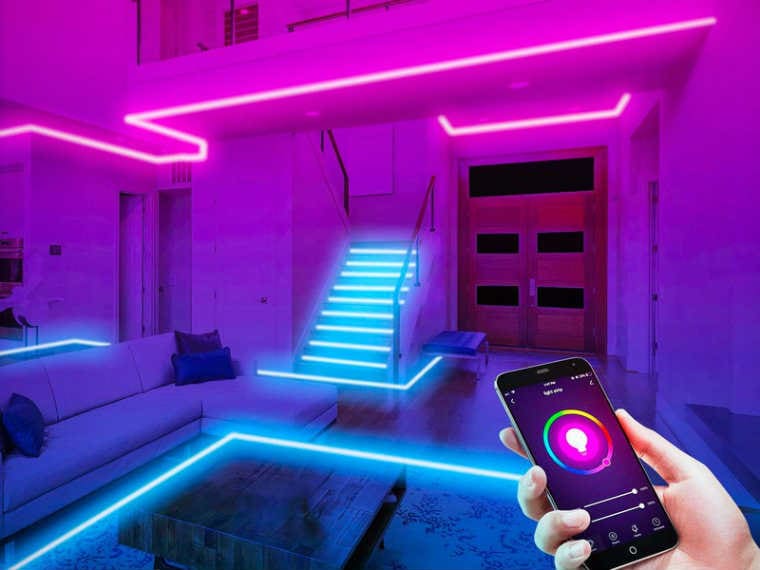
LED light strips have become a popular lighting solution, known for their flexibility, versatility, and efficiency. This lighting option, once primarily used for signage and backlighting, has now found a variety of applications in both residential and commercial spaces. Let’s explore the numerous benefits of led light strips and how they can contribute to enhancing our environments.
What are LED Light Strips?
LED light strips, sometimes referred to as LED tape or LED ribbon, are flexible circuit boards populated by surface mounted light-emitting diodes (SMD LEDs) and other components. They come in a wide range of colors, brightness levels, lengths, and can be either single-colored or multi-colored (RGB).
Key Benefits of LED Light Strips
Versatility
One of the most significant benefits of LED light strips is their versatility. Their flexibility allows them to be used in a variety of applications and be shaped to fit different spaces and surfaces. They can be used for accent lighting, under cabinet lighting, backlighting, task lighting, landscape lighting, and more.
Energy Efficiency
LED light strips are highly energy-efficient. They use significantly less power per unit of light emitted compared to traditional lighting options like incandescent or halogen lights. This efficiency makes LED light strips a cost-effective choice as they can lower electricity costs over time.
Long Lifespan
LED light strips last considerably longer than traditional light bulbs. High-quality LED light strips can last for 50,000 hours or more, which is five times longer than compact fluorescent bulbs and significantly longer than incandescent lights. This longevity results in reduced replacement costs and less waste.
Range of Colors and Effects
LED light strips can produce a wide range of colors and effects. This is especially true for RGB LED strips, which can produce virtually any color by combining red, green, and blue light at varying intensities. Some LED light strips can even be programmed to create dynamic effects like color transitions, flashing, or pulsing.
Easy Installation
Most LED light strips come with an adhesive backing, which allows for easy installation on a variety of surfaces. Furthermore, many LED strips can be cut at specific intervals, allowing them to be custom fit to your desired length.
Safety
LED light strips generate less heat compared to traditional lighting, reducing the risk of burns and fires. In addition, many LED light strips operate at low voltage, further enhancing their safety.
Environmentally Friendly
In addition to their energy efficiency and long lifespan, LED light strips are more environmentally friendly than traditional lighting options. They don’t contain harmful chemicals like mercury, which is found in compact fluorescent lamps, and their long life results in less waste.
Conclusion
The benefits of LED light strips make them a remarkable solution for various lighting needs. Their energy efficiency, long lifespan, and versatility offer unique opportunities for creative and functional illumination in homes, workplaces, and public spaces. As the technology continues to evolve, LED light strips will likely continue to play an increasingly significant role in lighting design.