

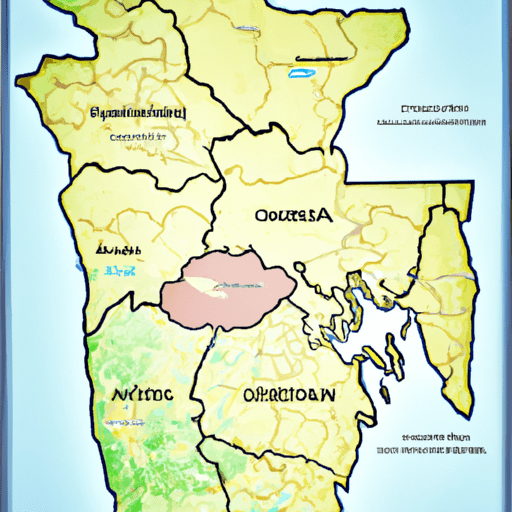
Assam is a state in India’s northeastern region, bordered by Bangladesh, Bhutan, and Myanmar. It is a culturally and linguistically diverse state, known for its lush tea gardens and iconic one-horned rhinoceros. But how many districts does Assam have?
Assam: How Many Districts?
Assam has 33 districts, spread across seven divisions. The divisions are Barak Valley, Central Assam, Lower Assam, North Assam, South Assam, Karbi Anglong, and Dima Hasao. The state is divided into four administrative regions: Upper Assam, Lower Assam, Hill Assam, and Barak Valley.
The districts of Assam are organized into five revenue divisions: Dibrugarh, Jorhat, Nagaon, Sibsagar, and Tinsukia. Each division is further divided into sub-divisions, circles, and then villages.
The state of Assam is home to many ethnic groups and languages, including Assamese, Bengali, Hindi, and Manipuri. The state is also known for its rich cultural heritage, including the traditional dance forms of Sattriya and Bihu.
Exploring India’s Northeastern State
Assam is known for its beautiful landscapes, lush tea gardens, and vibrant wildlife. It is also home to the Kaziranga National Park, a UNESCO World Heritage Site, and the Manas National Park, a wildlife sanctuary. The state is also home to many ancient monuments, including the Kamakhya Temple, the Ahom Monuments, and the Sibsagar Tank.
In terms of economy, Assam is one of the most important states in India. It is the largest producer of tea in the country and is also home to the oil and gas industry. It is also a major producer of coal, limestone, and natural gas.
Assam is a vibrant and culturally diverse state in India’s northeastern region. The state is divided into 33 districts, spread across seven divisions. It is home to many ethnic groups and languages, and is known for its stunning landscapes, lush tea gardens, and vibrant wildlife. Assam is also an important contributor to India’s economy, and is the largest producer of tea in the country.
Assam is located in the northeastern region of India, and is the largest state in the region. It has distinct cultural heritage, diverse geography and an amazing collection of flora and fauna. It is known for its tea plantations, wild life sanctuaries, hill towns and much more. One of the most interesting facts about Assam is that it is divided into 27 administrative districts.
These districts are administered by different district collectors who are in-charge of maintaining law and order, exchanging goods, population control and regulating traffic in the districts. Each district has its own distinctive set of characteristics, which contribute to the diversity of Assam.
The main districts in Assam are Kamrup, Cachar, Karbi Anglong, Darrang, Nagaon, Kokrajhar, Dhubri, Dhemaji, Sivasagar, Tinsukia and Bongaigaon. Each of them is further divided into smaller constituencies that have their own unique identity.
Kamrup is the largest and populous district in the state. It is divided into four subdivisions- Kamrup, Goalpara, Baksa and Chirang. This district is full of lush green tea estates and it is the heart of Assam’s tea industry.
Cachar is another important district with four subdivisions- Hailakandi, Karimganj, Cachar and South Cachar. This district is known for its rich culture and religious customs. It also houses the ancient pilgrimage center of Hajo.
Karbi Anglong district of Assam is unique as it is mainly inhabited by the Karbi people, who practice their own traditional religion and customs that make their presence unique. It has three subdivisions-Bokajan, Howraghat and Diphu.
Darrang district is popular for the Manas National Park that houses rare species of flora and fauna. It is divided into four subdivisions- Dalgaon, Udalguri, Sipajhar and Mangaldai. There are also number of wildlife sanctuaries, tea estates and national parks scattered throughout the state.
Nagaon district is mainly known as a major commercial hub and is also referred to as the gateway of Assam. It consists of four subdivisions- Nagaon, Raha, Laharighat and Kampur. Important rivers of this district are Kolong and Kapili.
Kokrajhar, another district of Assam, is known primarily for its Buxa Tiger Reserve and wide range of flora and fauna. It has four subdivisions-Kokrajhar, Bijni, Sidli and Gossaigaon.
Dhubri is yet another important district in Assam and it is known for its large Muslim population, who have been living in this district for centuries. It is divided into four subdivisions- Dhubri, Golokganj, Bilasipara and Gauripur.
Sivasagar is another important district of Assam, which is home to many monuments from the Ahom kingdom, such as the Rang Ghar, Kareng Ghar and Joysagar. It is divided into two subdivisions- Sivasagar and Moran.
Tinsukia is also a popular district in Assam and is known for its oil refineries. It is divided into two subdivisions- Tinsukia and Margherita.
Bongaigaon is the last district in Assam and it is divided into four subdivisions- Bongaigaon, Barpeta, Chirang and Bijni.
All in all there are 27 administrative districts in Assam and each of them has its own unique identity. These districts play an important role in highlighting the culture of Assam in India.