

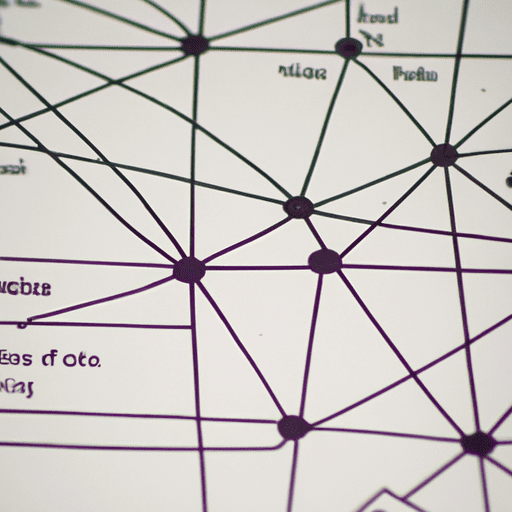
The web graph is a representation of the web as a graph, with nodes representing web pages and edges representing the links between them. This graph helps us to understand how different webpages are connected to each other and how information is shared across the web. In this article, we will be exploring the nodes and edges of the web graph in more detail.
What are Web Pages?
A web page is a document that can be accessed via the internet, containing text, images, videos and other forms of multimedia. Web pages are created by web developers and are hosted on web servers, which are computers that store web pages and make them available to the public. Web pages are linked together via hyperlinks, which are the web’s version of a bridge.
What are the Edges in the Web Graph?
The edges in the web graph represent the connections between web pages. These connections are created when a web page contains a hyperlink to another web page. The edges in the web graph are one-way connections, meaning that if page A links to page B, page B does not necessarily link back to page A.
Edges in the web graph can also represent relationships between web pages. For example, if page A links to page B, this could mean that page A is recommending page B to its users. This relationship can be represented by an edge in the web graph.
In conclusion, the web graph is a representation of the web as a graph, with nodes representing web pages and edges representing the links between them. The edges of the web graph represent the connections between web pages, as well as the relationships between them, and can help us to understand how web pages are connected and how information is shared across the web.
With the advent of the Internet, web pages have become easier for users to access and navigate. This has led to the creation of the Web Graph, a data structure which is designed to represent the connectedness of web pages. In this graph, nodes represent the web pages, while edges represent the relationships between them.
Nodes, also known as vertices, are the web pages that form part of the graph. They represent an area where web surfers, or users, can stop to access content. Nodes usually contain various elements such as text, images, videos, and other multimedia. In some cases, they can also contain links to different web pages. The information or content found within a node will depend on the type of page, and what it is used for.
On the other hand, edges, also known as arcs, connect two different nodes and represent the relationship between two web pages. They are commonly used when a hypertext link is included within one node to another, allowing a user to easily click and visit the next page. This is the basic way for users to access more information in a network. In addition, edges can also represent other types of relationships such as friendships, family links, and even collaborations between websites.
Generally, web pages are connected to other web pages in a Web Graph due to the amount of information they provide and how they fit into the structure of the web. By understanding the concept of nodes and edges, it is possible to understand how web pages are connected and how users can navigate through them. This makes it possible for the development of sophisticated web-based applications and services.